
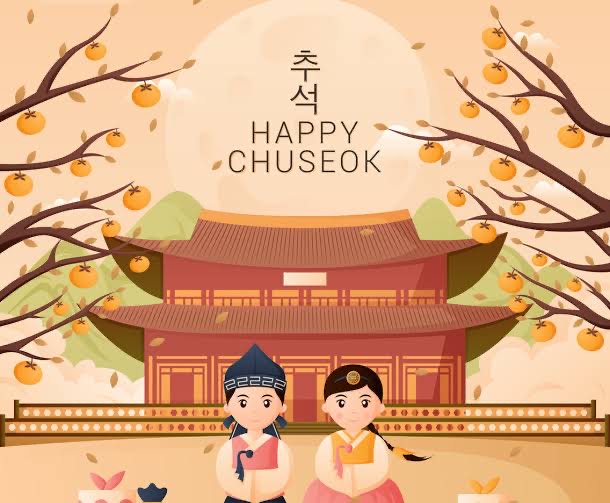
The Korean thanksgiving Chuseok is here. It is one of the most important traditional holidays in Korea. Chuseok is celebrated on 15th day of eighth month of lunar calendar also it coincides with the harvest moon. The harvest moon symbolizes abundance. During this time the families come together to honor their ancestors, they share meals made from freshly harvested crops.
The Historical data of Chuseok dates back to ancient agrarian society. The records suggest that the holidays were celebrated even during the Silla dynasty and the festival was called Gabae. During that time the festival was celebrated by organizing various competitions, feasting on, thanks giving for a successful harvest. Soon the festival evolved nationwide and the rituals known as “charye”were performed. The members offered food and drink at the food alters for their ancestors as a gesture of respect.

Songpyeon, a half-moon-shaped rice cake stuffed with ingredients such as sesame seeds, chestnuts, and red beans is one of the important element of Chuseok. The families gather together to prepare Songpyeon this tradition is believed to bring good fortune to the future generations of the family. Some of the other activities include visiting ancestry burial sites, wearing traditional clothing Hanbok, ssireum (Korean wrestling) and ganggangsullae (a dance performed by women during the full moon) .
Chuseok is not only a traditional but a modern celebration. There is a phenomenon called as “Chuseok migration” it is because millions of people return to their hometown during this period. Despite the agrarian roots its essence remains timeless and serves as a reminder of Korea’s deep connection to its history, harvests, and heritage.
 The Korea Times Xpress