
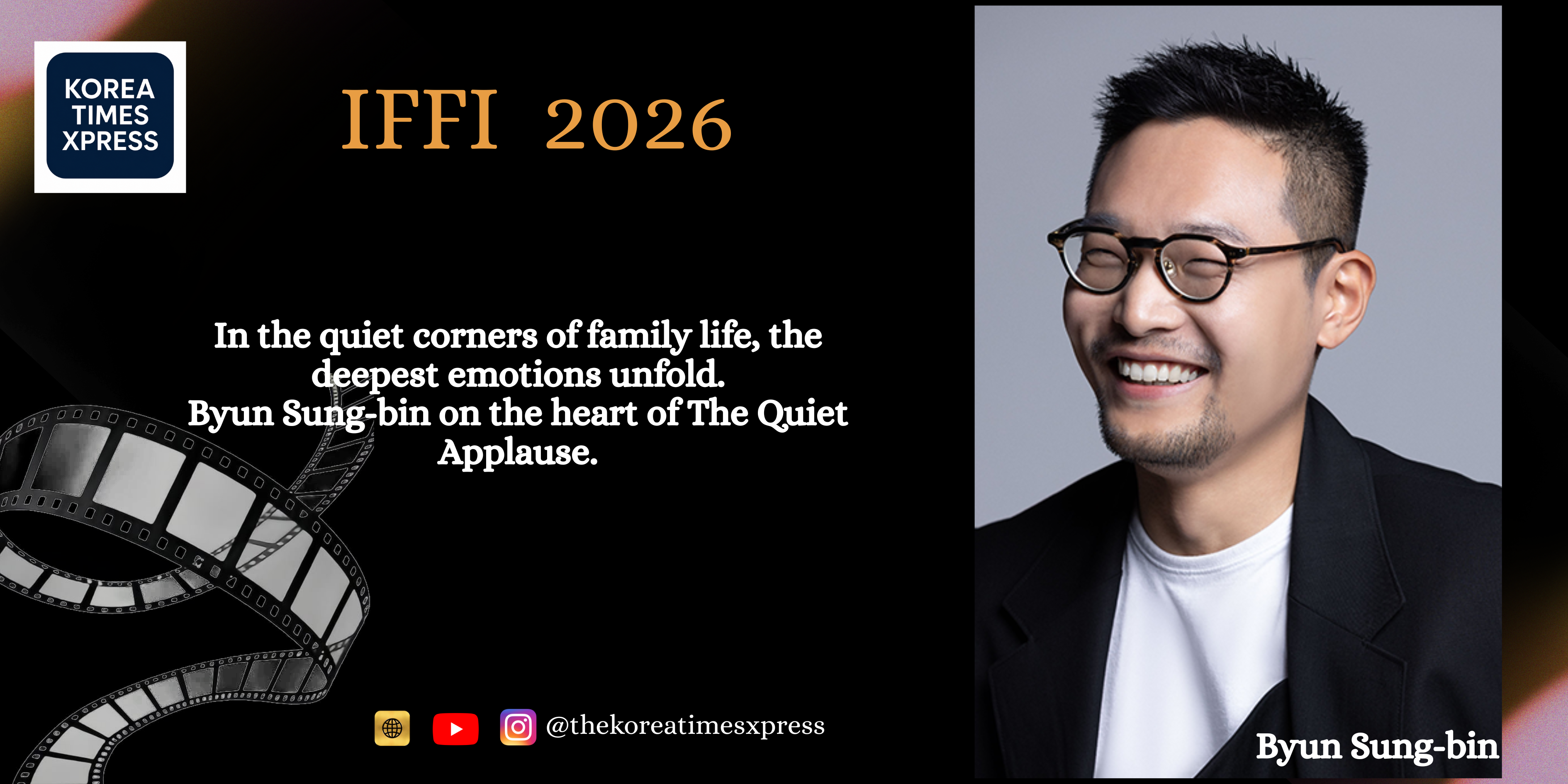
Byun Sung-bin brings audiences into the intimate world of The Quiet Applause (Aahn-ui Sohn-Bbyohk), an 80-minute Korean family drama that unfolds on a rural sheep ranch. Told through the perspectives of a young girl, her autistic older brother, and their parents, the film explores the complexities of love, independence, sibling emotions and the difficult decisions families make while caring for loved ones with disabilities.
What inspired you to make THE QUIET APPLAUSE, and what is the story you wanted to tell?
This film began with a non-disabled acquaintance who grew up within a family that had a disability. In my previous works, I have consistently spoken about characters suffering for reasons unrelated to their own choices. This time, I wanted to explore what burden a non-disabled sibling bears while growing up within a family of people with disabilities, and what difficulties families with disabled children face.
However, to ease the psychological burden of the subject matter and bridge the gap with the audience, a three-year-old child was made the protagonist. I wanted to create a warm family film that audiences could approach without feeling burdened, even those who have no special connection to a family member with a disability.
How does the film explore childhood, family and emotional understanding?
The film unfolds through the different perspectives of four characters: a three-year-old girl, Song San; her son, Song Pul, who has autism; their mother, Seon-hee; and their father, Gi-yeol.
It depicts how Sun-hee and Gi-yeol, who have differing views on Song-pul’s admission to a group home; Song-pul, who wants to break free from her mother’s overprotection and become independent; and Song-san, who believes her mother’s love has been taken by her older brother, each perceive and process this issue from their own perspectives, and how they grow through the process.
Rather than dividing characters into good and evil, I wanted to create a story that allows the audience to understand and empathize with each person’s perspective and emotions. Ultimately, I hoped that after watching the film, viewers would root for all the characters rather than blaming any one person.
What does the title THE QUIET APPLUASE represent in the context of the film?
One of the film’s key settings is the children’s song “If You’re Happy and You Know It, Clap Your Hands.” It is a song that says, if you know what it means to be literally happy, then clap your hands. Even when this song plays early in the film, Songsan does not clap his hands. But at the end of the film, she claps her hands to her brother’s piano performance. Through this, I aimed to reveal the changes that occurred within Songsan.
However, in the final scene of the film, the sound of Songsan clapping his hands is not heard. Rather than ending the film simply with the characters’ happiness, I hoped the audience would reflect on what kind of lives Songsan and this family would lead afterward. Since their lives do not necessarily lead to a purely happy ending in reality, I wanted to leave the audience with points of reflection and a lingering impression.
And that is how I came to choose the title, The Quiet Applause.

How did you approach the film’s storytelling, visuals and emotional tone?
The script was written based on a classical three-act structure. However, from there on, it developed by focusing on the characters’ emotions without becoming overly bound by a tightly woven structure and design.
Visually, I focused on capturing the subtle emotional shifts in the characters, which are easy to overlook if you’re not looking closely. I used a camera that maintains a certain distance from the subject to capture close-ups, aiming to reveal subtle expressions and emotional shifts. At the same time, we strategically placed wide long shots to capture the beautiful scenery of summer in South Korea, adding a warm atmosphere to the film as a whole.
This film also features an actor with a three-year-old child and autism. To capture their genuine emotions, we aimed to naturally accept and utilize the feelings that emerged from non-professional actors, even if they differed from the lines or acting described in the script. Sometimes I adjusted the script or even changed the scenes to match. While adopting the format of a feature film, it also employs a documentary approach that responds flexibly to the real emotions captured on site.

What are the challenges of independent filmmaking in South Korea today?
I think the biggest challenge is that the audience consuming Korean independent films is gradually shrinking. Of course, as a creator of films, I must also strive to make good movies and create works that audiences want to see. However, there are also structural limitations to Korean independent films that must reach audiences, which are difficult to overcome through the creators’ efforts alone.
For Korean independent films to continue being produced and reach audiences, I believe that ultimately, the audience’s love and interest in independent films must grow even stronger.
How do you see Korean independent cinema connecting with international audiences?
I believe that the most important first gateway for Korean independent films to meet overseas audiences is international film festivals. Subsequently, through offers or cooperation from overseas distributors, it moves to local theatrical release, providing the opportunity to reach a larger audience.
I have heard of cases where a film by a director I know was first introduced at film festivals in Taiwan and Japan, and as local audiences shared their impressions and discussions of the film on social media platforms like Twitter and Instagram, it eventually led to a theatrical release.
I believe film festivals play an important role in introducing Korean independent films that are not yet known to overseas audiences and conveying the charm and appeal of these works to local viewers. And it seems that the voluntary word-of-mouth from viewers connects more audiences with the films, eventually leading to new opportunities such as theatrical releases.
Ultimately, I believe the power for a film to reach more audiences comes from the audience’s interest and response.
What messages would you like Indian audiences at IFFI to take away?
The story of a family living in a small Korean village may feel somewhat unfamiliar and distant to Indian audiences. However, this film contains emotions that transcend borders and cultures and resonate universally with anyone. I hope that after watching the film, a warm sadness lingers in your heart for a long time. Thank you.
Through The Quiet Applause, Byun Sung-bin resists easy answers and simplistic portrayals of family conflict. Instead, he allows each character to be understood through their own emotional world, leaving audiences to reflect on love, responsibility, independence and the quiet struggles that often remain unseen within families. As the film moves toward its understated ending, its silence becomes as meaningful as its emotions.